ROCKWINDOW REALITY CHECK
When “Selling Out” Was the Worst Thing You Could Call a Band
When I was growing up in Los Angeles, being called a sellout was about the worst thing that could happen to a rock band.
Today nobody seems to care. A heavy metal band can record a country song. A punk band can release a Christmas album. Fans might complain for a week and then move on.
Back in the late sixties and early seventies, it was different. Change your sound and you risked a rebellion from your own audience.
I watched some of that happen firsthand.
The first major concert I ever attended was at the Hollywood Bowl when I was about ten and a half years old. The lineup was incredible: Tommy James and the Shondells, the Young Rascals, and Eric Burdon and the Animals.
A neighborhood friend and I sat almost all the way in the back. It didn’t matter. To me it was the greatest thing I’d ever seen.
After the show I met my dad outside near the giant Hollywood Bowl sign.
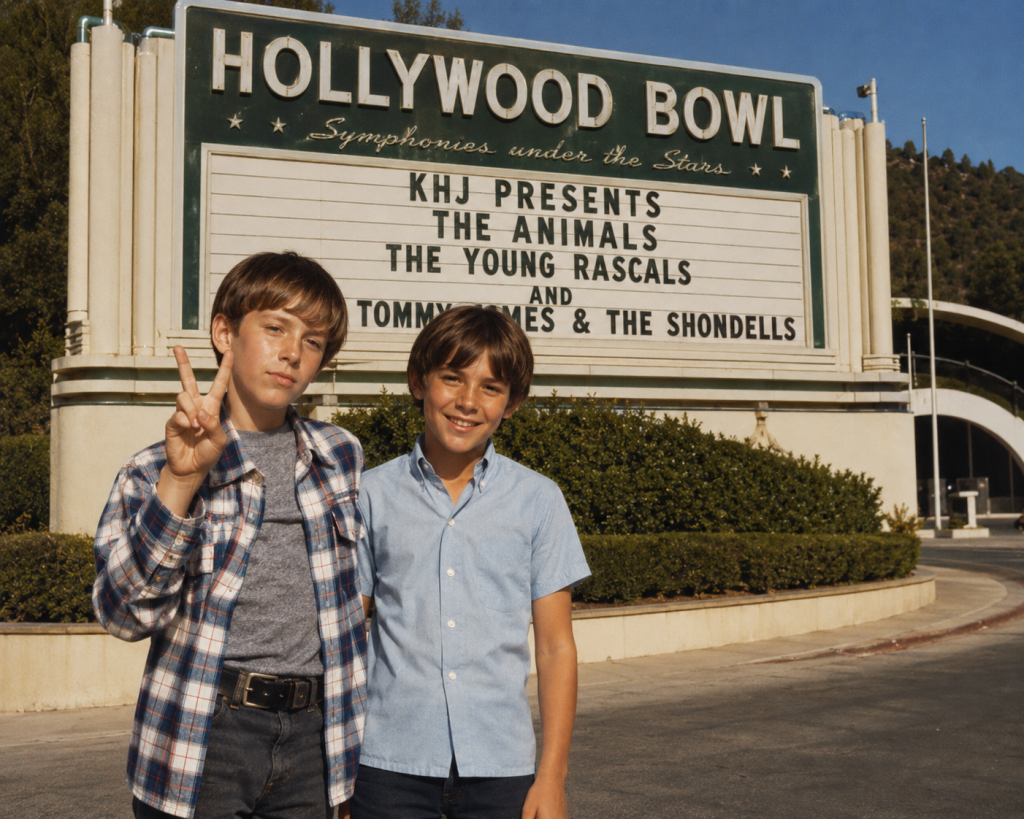
The first thing I did when I climbed into the car was turn on KHJ radio. Eric Burdon was scheduled to appear after the concert.
Sure enough, there he was talking about the show, thanking the audience and telling listeners how much California meant to him.
To a kid, it felt like magic.
Around that time my musical hero had become John Fogerty and Creedence Clearwater Revival. Unfortunately my parents had other ideas.
“Too many hippies.”
“Too dangerous.”
So when Creedence came through Los Angeles, I wasn’t allowed to go.
I was crushed.
The following year I got another chance to see live rock and roll.
I was eleven years old and sitting by myself at the Forum watching Steppenwolf, the Grass Roots, and Three Dog Night.
I still remember wandering through the hallways during the show. Teenagers were lined against the walls completely out of it. The nurses station looked overwhelmed. Meanwhile there I was — a little kid wandering around by himself, totally against drugs and trying to figure out what planet everybody else was on.
Then Three Dog Night made an announcement.
“We’re recording a live album tonight.”
The crowd erupted.
As they launched into One, everybody in the building seemed to be singing at the top of their lungs.
Years later I bought Captured Live at the Forum and nearly fell out of my chair.
There I was.
My voice.
On the record.
To this day I can still hear it.
Looking back, that concert reminds me of something else.
Three Dog Night was one of the first bands I can remember hearing accusations of “selling out.” They built an empire performing songs written by other people. One. Eli’s Coming. Mama Told Me Not to Come. An Old Fashioned Love Song.
They weren’t the struggling garage band image many rock fans worshipped. They became hit makers.
And few songwriters were bigger than Paul Williams.
Williams wrote An Old Fashioned Love Song, which may be my favorite Three Dog Night record. He also wrote We’ve Only Just Begun and Rainy Days and Mondays for The Carpenters, along with dozens of other songs that became part of American pop culture.
Years later, long after those records had become part of my life, I unexpectedly met Paul Williams.
At the time I was involved in what the Orange County Register once called the most beautiful dispensary in California. That’s a story for another Rockwindow Reality Check.
One afternoon I walked across the street in Sunset Beach and found myself standing in line behind none other than Paul Williams.
Trying to break the ice, I said, “Mr. Williams, my mother is from Omaha, Nebraska.”
He smiled.
That may sound like a strange opening line, but Omaha has always been proud of its famous sons. Marlon Brando, Henry Fonda, Nick Nolte, and Johnny Carson all had Nebraska connections. Growing up, everybody seemed to know the stories of who came from where.
Paul couldn’t have been nicer.
I told him how much I admired his songwriting and how those Three Dog Night records had been part of my life since childhood. We talked for a few minutes, and I invited him to come across the street and see the dispensary.
He politely declined.
“That was a long time ago,” he said with a smile.
Naturally, I couldn’t resist pitching Rockwindow.
To my surprise, he told me that I should come visit him at ASCAP, where he still served as President and Chairman of the Board.
I never forgot that conversation.
In fact, I still intend to take him up on that invitation one day.
Funny how life works.
One minute you’re an eleven-year-old kid screaming along with Three Dog Night at the Forum. The next you’re standing in Sunset Beach talking with one of the men who helped write the soundtrack of that era.
Grand Funk Railroad went through a similar transformation. Their early records sounded raw, loud and dangerous. Then came We’re An American Band and suddenly everything became tighter, cleaner and more radio friendly.
Journey may be the greatest example of all.
The early Journey albums barely resemble the band most people remember. Then Steve Perry arrived and suddenly came Lights, Wheel in the Sky, Open Arms, and eventually Don’t Stop Believin’.
Some fans loved it.
Others screamed sellout.
But here’s the interesting part.
All three bands became bigger after they changed.
Maybe selling out wasn’t really selling out.
Maybe it was survival.
Maybe it was understanding that musicians weren’t just artists. They were also trying to make a living.
And maybe the biggest irony of all is this:
The same people who once accused bands like Journey, Grand Funk Railroad, and Three Dog Night of selling out are probably the same people singing every word when those songs come on the radio today.
Funny how time works.
— Marcus Hause
Rockwindow Reality Check