Rockwindow Reality: John Lodge
by
Marcus Hause
I remember the exact moment I first heard the Moody Blues—or at least the exact place. I cannot remember which song was playing. All I knew was that I was hearing what sounded like an orchestra behind a rock band, and at ten or eleven years old, I found it completely intriguing.
I was already a serious music lover. There were the Beatles, Tommy James and the Shondells, and our close neighbors, the Beach Boys, from nearby Hawthorne. My brother attended Westchester High School Los Angeles near LAX, where another local band, the Turtles, had already made it onto the charts.
I first heard that unmistakable Moody Blues sound down the street from my house. My friend’s older brother lived by himself in an added-on room at the back of the family home. I remember seeing him stretched out on his bed, almost in a trance, completely absorbed in the music.
This was a deeply religious family, and I am certain there were no drugs involved—at least not that early. He was probably fifteen years old, and the music alone had carried him somewhere else.
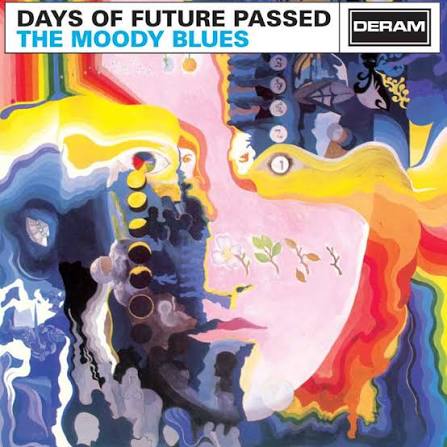
The album must have been Days of Future Passed, the Moody Blues’ 1967 breakthrough. “Nights in White Satin” came from that album, while In Search of the Lost Chord followed in 1968. The combination of a rock band with orchestral arrangements introduced a sound that would help define the Moody Blues for generations.
Before that transformation, there had been “Go Now,” the dramatic, soulful British Invasion hit sung by Denny Laine. The song received a great deal of radio play, and I would sing it while walking to school. The Moody Blues never really recorded another hit quite like it.
Denny Laine had been the voice and spirit of the original group’s rhythm-and-blues sound. When Laine and bassist Clint Warwick left in 1966, their lives took very different paths: Laine went on to worldwide fame with Wings, while Warwick chose family life and a regular trade. Justin Hayward and John Lodge then joined the Moody Blues. Rather than trying to imitate Laine, the new lineup moved away from American-style R&B and began creating music that was more melodic, reflective and distinctly English.
Justin Hayward brought emotional songs such as “Nights in White Satin.” John Lodge contributed songwriting, vocals and melodic bass playing. Mike Pinder’s Mellotron supplied the sweeping choir-and-orchestra effect, while Ray Thomas’s flute added another unmistakable texture.
Instead of simply trying to create another three-minute pop single, the Moody Blues began constructing complete albums around ideas, moods and musical journeys. That became the sound for which they would be remembered.
I remained a Moody Blues fan for the rest of my life, but I never imagined that decades later I would be handed a ticket to see their 50th Anniversary Tour at the Wynn Las Vegas. I did not even know I was going until the day before.
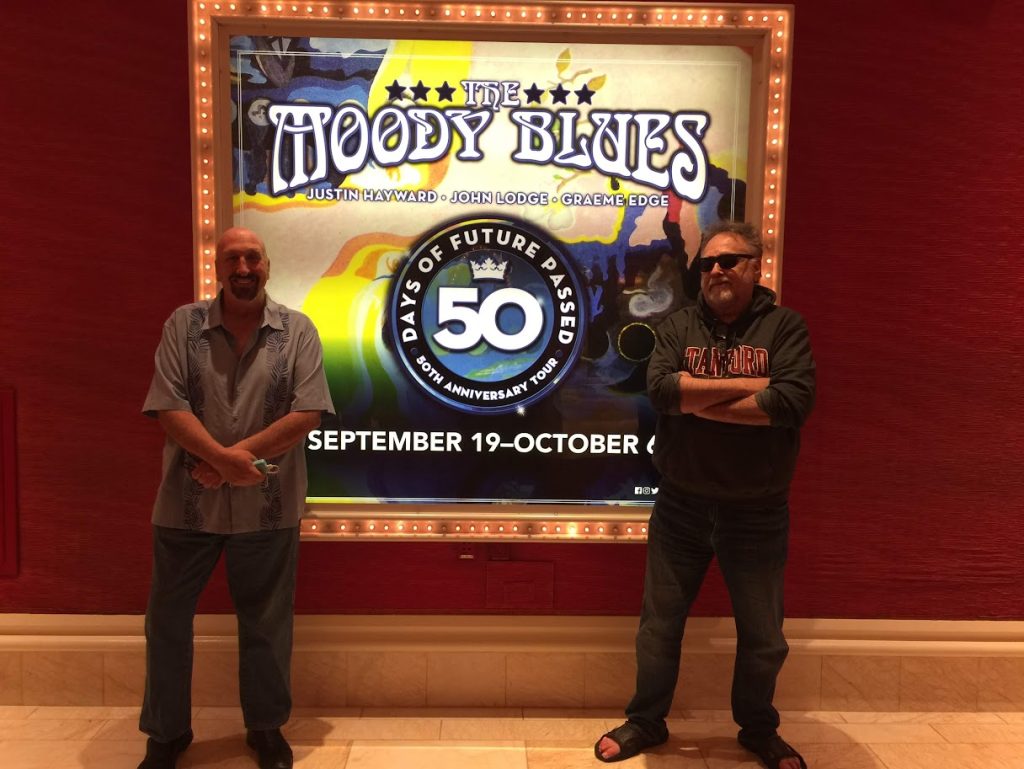
The invitation came through Eddie Wenrick, a longtime music-industry executive who is now working with Nyhl Henson and Technotainment. Eddie had known John Lodge and was also connected to the Moody Blues’ touring keyboardist, Alan Hewitt. Through that friendship, two tickets became available for Nyhl and me.
Nyhl, one of the pioneering executives behind MTV and CMT, simply handed me a ticket.
I was completely flabbergasted.
Eddie has worked with some of the most important artists and companies in the music business, including the Moody Blues, Elvis Presley, Jimi Hendrix, Columbia Records, Epic Records, Concerts West and the management organization behind KISS. His years of friendships and professional relationships helped make this extraordinary evening possible.
Alan Hewitt had joined the Moody Blues as a touring keyboardist around 2010. He performed with them at major venues including the Hollywood Bowl, Red Rocks and London’s O2 Arena. He also appeared in their live Days of Future Passed production and performed with the group during its 2018 induction into the Rock & Roll Hall of Fame.
The concert at the Wynn was everything I had hoped it would be. Hearing those songs live carried me all the way back to that room down the street from my childhood home, where I had first heard the Moody Blues’ orchestral-rock sound.
After the show, Nyhl and I were invited backstage. Justin Hayward had already left, but John Lodge was still there.
Suddenly, I was standing beside one of my rock-and-roll heroes.
John Lodge joined the Moody Blues in 1966 and became one of the principal architects of their classic sound as bassist, singer, harmony vocalist and songwriter. His melodic bass playing and high harmonies helped define landmark albums such as Days of Future Passed, In Search of the Lost Chord and Seventh Sojourn.
Lodge wrote and sang several of the group’s best-known songs, including “Ride My See-Saw,” “I’m Just a Singer (In a Rock and Roll Band),” “Isn’t Life Strange” and “Steppin’ in a Slide Zone.” He remained with the Moody Blues for decades, helping carry the group from its late-1960s orchestral-rock breakthrough through years of international touring, platinum albums and eventual induction into the Rock & Roll Hall of Fame.
What did I talk about with a man whose music I had first heard as a child?
I asked him about his childhood and young adult life.
John Lodge grew up in Birches Green, near Erdington in Birmingham, England, in a devout Christian household. His father was an engineer and a committed evangelical, and John regularly attended Sunday school at Birches Green Evangelical Church. That upbringing gave him a moral and spiritual foundation that remained with him throughout his life and career.
As a teenager, he became captivated by the records of Buddy Holly and Jerry Lee Lewis that he heard playing on jukeboxes in Birmingham cafés. At fourteen, he met Ray Thomas, who would later become another member of the Moody Blues, and joined his group, El Riot and the Rebels.
Before committing himself fully to music, Lodge studied engineering—an unusual background for a future rock star. His high harmonies and inventive bass playing would later become essential parts of the Moody Blues’ sound.
We talked about where he believed music might be going. Nyhl and John also discussed Christian music, faith and how spiritual ideas could continue to find a place within popular entertainment.
Even at the height of the Moody Blues’ success, John remained grounded. The band sold millions of albums and performed before enormous audiences, but he did not seem consumed by the excesses that surrounded so many musicians of his generation.
He talked about wanting to see his family and how proud he was of his daughter, Emily and son Kristian.
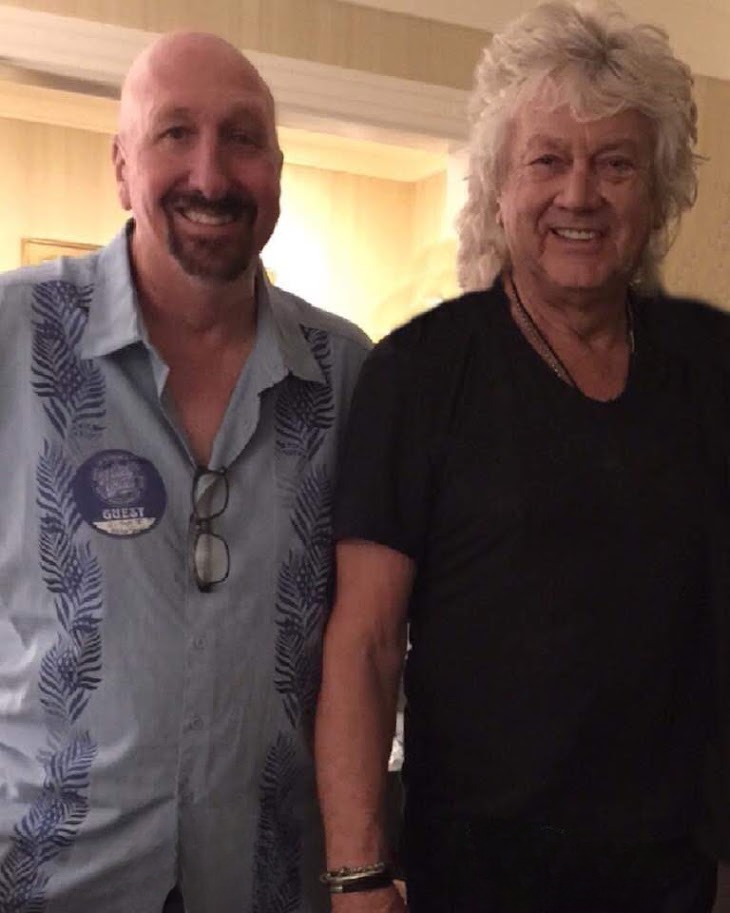
That is what stayed with me most. Here was a man whose music had reached millions of people around the world, yet the subjects closest to his heart were his faith and his family.
John’s spirituality was also reflected in his music. “Isn’t Life Strange” carried the kind of questioning and reflection that became central to the Moody Blues. His later solo work continued to explore hope, perseverance and spiritual resilience.
He often concluded his concerts and interviews with the words:
“Thank you for keeping the faith.”
It became something of a personal benediction—a final message of encouragement to the people who had followed his music through the years.
John Lodge died suddenly and unexpectedly in October 2025. His passing brought an enormous sense of loss to his family, friends, fellow musicians and Moody Blues fans around the world.
I was deeply saddened when he passed, but I will always be grateful that I had the opportunity to meet him.
More than fifty years separated the boy listening to that mysterious orchestral rock music in a back room near Westchester and the man standing backstage beside John Lodge at the Wynn.
Yet, in my mind, those two moments remain connected.
I can still picture that room down the street from my childhood home. I can still see my friend’s older brother stretched out on his bed, lost in the sound. I can still remember wondering how a rock band could make music that seemed so vast and otherworldly.
And I can still feel the wonder of realizing that I was meeting one of the musicians responsible for it.
That night would not have happened without Eddie Wenrick’s friendship with John Lodge and Alan Hewitt, and his connection with Nyhl. Today, Eddie is bringing that same lifetime of experience and relationships to Technotainment.
I knew the exact space and time when John Lodge’s musical gift first reached me. Decades later, through Eddie, Alan and Nyhl, I was given the chance to stand beside the man responsible for so much of that music.
I am planning to visit England in September. Perhaps, while I am there, I will be able to visit John’s final resting place and quietly thank him once again—for the conversation, for the memory and for the music that first reached me when I was a boy.
Some moments in life really do come full circle.