By Marcus Hause
For years, classic rock fans wondered…
Some believed he and Dave Mason had a falling out. Others assumed there had been some bitter dispute that ended one of the most successful musical partnerships of the 1970s. The rumors seemed believable because Jim gradually disappeared from public view, and unlike many of his contemporaries, there was no major biography, no Wikipedia page, and very little information available about his later years.
As it turns out, much of what people thought they knew wasn’t true.
I knew Jim Krueger personally.
Years later, after becoming a rock radio DJ, I had the opportunity to interview the late Dave Mason. One of the questions I wanted answered involved the rumors that had circulated for years. Had there really been a falling out between Mason and Krueger?
The answer was no.
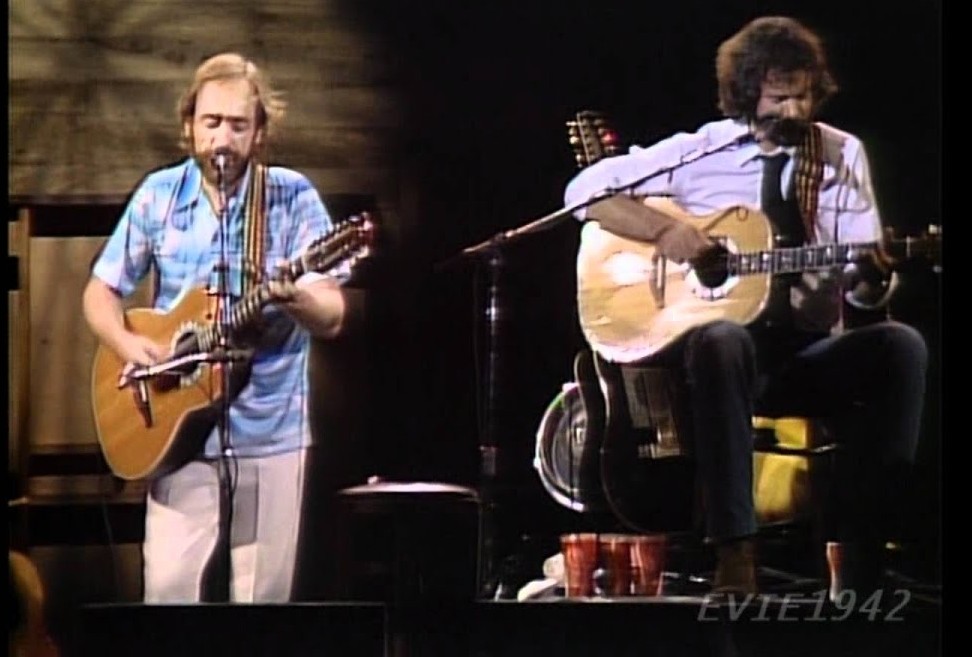
What actually happened was far less dramatic and far more common in the music business. During the early 1980s, Mason found himself battling his record company and financial problems. Rather than ending their friendship, circumstances forced Dave & Jim to adapt. Large touring bands became difficult to support financially, and duo responded by taking their music on the road in a stripped-down acoustic format years before MTV would popularize the idea with Unplugged.
In his autobiography, Only You Know & I Know, Mason speaks warmly about Jim and repeatedly credits him for his enormous contributions to his career. He praised Krueger’s musicianship, songwriting, harmony vocals, and especially his role in bringing We Just Disagree to life. Far from describing an enemy or former partner, Mason wrote about a trusted friend whose talent helped shape some of the most memorable music of his solo career.
That wasn’t the only evidence.
I had seen Jim around the Dave Mason world for years, and nothing I ever witnessed suggested hostility between the two men. In fact, one of my favorite stories came directly from Mason himself. Dave once joked that he hoped Jim would go through another breakup so he could write another song as good as We Just Disagree. That’s not the kind of thing you say about someone you dislike. It’s the kind of thing you say about a friend whose talent you genuinely admire.
Most fans know Jim Krueger because he wrote We Just Disagree, one of the defining songs of 1970s FM radio.
What many don’t realize is that he also played the unforgettable 12-string acoustic introduction and sang the soaring harmony vocals that became part of the song’s identity. The record wasn’t simply Mason performing a Krueger song. It was a collaboration between two gifted musicians whose talents complemented one another perfectly.
But Jim’s story goes far deeper than a single hit record.
As much as We Just Disagree deserves its place in rock history, there is another Jim Krueger composition that has always meant a great deal to me: The Words. Recorded by Dave Mason on Mariposa de Oro, it showcases Krueger’s gift for melody and emotional honesty every bit as much as his more famous hit. If you’ve never heard it, do yourself a favor and give it a listen. It remains one of the hidden gems of the classic rock era.
Jim’s career extended well beyond Dave Mason.
He worked with Les Dudek and Mike Finnigan in the Dudek, Finnigan & Krueger Band. He crossed paths with some of the finest musicians in Southern California and contributed to projects connected to Bob Dylan’s legendary Desire era. His fingerprints can be found throughout a remarkable chapter of American rock music.
Then there was Tim Weisberg.
Long before smooth jazz became a marketing category, Weisberg was one of the most influential flutists in modern music. His fusion of rock, jazz, and California cool created a sound all his own.
What many people don’t realize is that Tim and Jim worked together professionally, sharing the same Southern California musical circles that produced some of the era’s most memorable recordings.
My connection to Tim was personal. During my years on Mammoth radio, he would often stop by the station and hang out while I was on the air. Tim was exactly what you hoped he’d be—talented, approachable, and completely comfortable talking music for hours.
Through Tim, Mason, and the extended Southern California music family, I found myself crossing paths with many of the musicians who helped define the soundtrack of our generation.
My favorite memory, however, involves all three of us.
Many afternoons found Tim Weisberg, Jim Krueger, and me sharing beers at Mickie’s Bar above the Manhattan Beach Pier. There was no entourage. No record executives. No backstage passes. Just friends, musicians, stories, laughter, and the Pacific Ocean rolling in outside the windows.
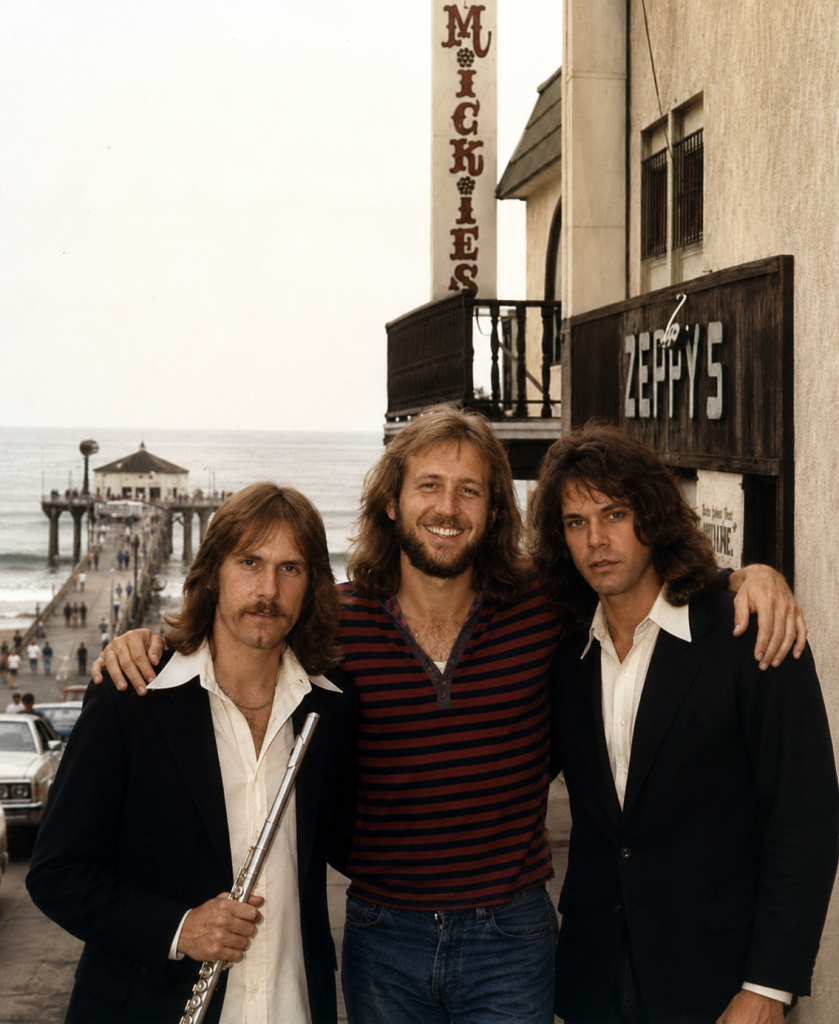
Looking back, I didn’t realize those afternoons would become memories.
The last time I ever saw Jim Krueger was at Mickie’s Bar with Tim.
At the time it felt like just another day among friends.
Years later, it would become one of those moments you wish you had known was important while it was happening.
That’s the Jim I remember.
Not the mystery.
Not the rumors.
Not the myths.
Just Jim.
Friends called him “Bruiser,” a nickname that was funny precisely because it couldn’t have been less accurate. Jim was soft-spoken, thoughtful, humble, and completely free of the ego that often surrounds the music business. He could have a songwriting credit on one of classic rock radio’s most enduring songs and still sit down at the bar and talk like any regular guy.
That may explain why his story remained hidden for so long.
Rock history tends to celebrate the stars standing under the spotlight. Jim Krueger was one of those rare musicians whose fingerprints are all over the music while his name remains largely unknown to the public.
When Jim eventually left Southern California and returned to his hometown of Manitowoc, Wisconsin, he wasn’t coming home as a celebrity.
He was coming home as Jim.
That’s one of the most remarkable parts of the story.
While much of the rock world gradually lost track of him, the people of Manitowoc never did.
To this day, Jim Krueger remains something of a folk hero in his hometown. Local musicians still speak of him with pride. Friends remember not only the songs he wrote but the kind of person he was. His accomplishments weren’t measured by record sales or gold albums. They were measured by the lives he touched and the respect he earned.
In Los Angeles, Jim had worked alongside some of the biggest names in rock music.
Back home, he was simply one of their own.
There is something refreshing about that.
In an era when so many musicians spent their lives chasing fame, Jim eventually returned to the place where none of that mattered. What mattered was family, friendship, music, and community.
The irony is impossible to miss.
Millions of people knew Dave Mason’s voice.
Millions knew We Just Disagree.
But in Manitowoc, people knew Jim Krueger.
And in the end, that may have been the more important legacy.
For many years, fans were left to speculate about what happened to him. He passed at only 43 years and because information was so scarce in the pre-internet era, rumors naturally filled the void. Some assumed drugs. Others wondered if he had taken his own life.
Neither was true.
In March of 1993, just days after his 43rd birthday, Jim Krueger was struck by a severe case of pancreatitis. What began as a sudden medical crisis quickly became fatal. He passed away on March 29, 1993.
Because the internet was still young and because Jim never sought the spotlight, many fans never learned what really happened. The mystery lingered for decades.
Perhaps that’s why his story deserves to be told.
Not because he was a superstar.
Not because he demanded attention.
But because he was one of those rare musicians whose fingerprints can be found throughout classic rock history even when his name cannot.
Millions of people have heard Jim Krueger’s music.
Far fewer have heard his story.
It’s time they did.