By, Marcus Hause
By the time Steve Winwood was old enough to legally order a pint, he had already become one of Britain’s most astonishing young musicians.
Born in Birmingham, England, in 1948, Winwood grew up in a house where music wasn’t a hobby—it was part of everyday life. His father, Lawrence “Lawrie” Winwood, worked as a foundryman but spent weekends playing saxophone and clarinet in local jazz and dance bands.
Those rehearsals and pub gigs became Steve’s classroom. By age four he was playing piano. By eight he was performing alongside his father and older brother Muff in local pubs, sometimes with the piano turned away from the audience so patrons wouldn’t realize the keyboard player was still a child.
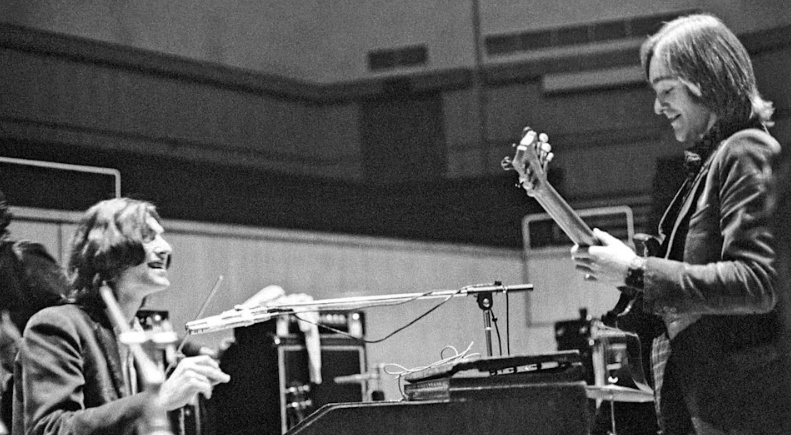
Muff Winwood would become just as important to Steve’s development. The older brother introduced him to rhythm and blues records and helped guide him toward the music that would eventually define his career. Together they formed the backbone of an astonishing rise through the Birmingham music scene.
Steve’s voice was the first thing people noticed. While other British singers were imitating American rhythm and blues artists, Winwood seemed to absorb the music naturally. His soaring tenor drew comparisons to Ray Charles, one of his greatest influences.
Before he was old enough to drive, he was already backing visiting American blues legends and earning a reputation as a musical prodigy.
Everything changed when local guitarist Spencer Davis saw Steve and Muff performing in Birmingham. Impressed by the brothers’ talent, Davis invited them into what became The Spencer Davis Group.
The band soon exploded with hits including “Keep On Running,” “Somebody Help Me,” “Gimme Some Lovin’,” and “I’m A Man.” Audiences couldn’t believe the soulful voice pouring out of a teenager barely old enough to shave.
But success brought frustration.
Winwood was already hearing music in his head that went beyond radio-friendly rhythm and blues. He wanted jazz influences, folk influences, improvisation, and experimentation.
In 1967, at just nineteen years old, he walked away from one of Britain’s hottest bands.
That decision led directly to Traffic.
Back in Birmingham, Winwood began jamming with drummer Jim Capaldi, multi-instrumentalist Chris Wood, and guitarist Dave Mason. The chemistry was immediate. The four musicians shared a desire to push beyond conventional rock music, blending folk, psychedelia, jazz, blues, and improvisation into something entirely new.
Traffic was born.
Yet from the beginning there was creative tension.
Winwood and Mason were both gifted songwriters, but they often wanted different things. Winwood gravitated toward exploratory musical landscapes. Mason preferred concise, melodic songs with strong pop sensibilities.
Ironically, that conflict became one of Traffic’s greatest strengths.
Songs like “Dear Mr. Fantasy” showcased Winwood’s vision, while Mason contributed classics such as “Feelin’ Alright,” one of the most enduring songs ever associated with the band.
The disagreements were real. Mason would leave and rejoin Traffic multiple times. Over the years, stories circulated that the relationship between Winwood and Mason had deteriorated.
In his 2024 memoir, Only You & I Know, Mason candidly discussed the tensions and even recalled Winwood once telling him he didn’t like his writing, singing, or playing. The comment clearly stayed with him for decades.
Yet Mason never stopped acknowledging Winwood’s brilliance. And Winwood never denied Mason’s importance to Traffic.
I always found the situation fascinating because I met Dave Mason several times over the years. Whenever Traffic came up, he often seemed reluctant to talk much about it. There was usually a sense that old wounds remained.
Then something happened that made me wonder if time had softened those feelings.
On April 4, 2025—my birthday—I attended Dave Mason’s concert at Graceland. Instead of avoiding the subject, Mason called the show “Traffic Jam.”
It struck me that perhaps he had reached a place where he could celebrate that chapter of his life rather than fight it.
When Dave Mason passed away in April 2026 at age 79, Steve Winwood’s response surprised many longtime fans.
Rather than revisiting old conflicts, Winwood issued a heartfelt statement praising his former bandmate. He described Mason as playing an important role in shaping Traffic’s sound and identity during its earliest years.
He praised Mason’s songwriting, musicianship, and distinctive spirit, adding that Mason’s contributions continue to resonate with listeners around the world.
Winwood concluded with a sentiment that seemed to close the circle on one of rock’s longest-running creative rivalries: Dave Mason’s place in Traffic history, he said, “will always be remembered, and through the music, his presence endures.”
Maybe that’s the real Traffic story.
Not a story of feuds.
Not a story of egos.
But a story of four very different musicians who collided at exactly the right moment, creating music powerful enough to outlive all the arguments.
Nearly sixty years later, Steve Winwood is still one of rock’s most respected voices. Dave Mason is gone, but songs like “Feelin’ Alright” remain woven into the fabric of classic rock.
And somewhere in that music, the kid from Birmingham who learned jazz from his father and the guitarist who challenged him every step of the way are still playing together.