A Reality Check by Marcus Hause
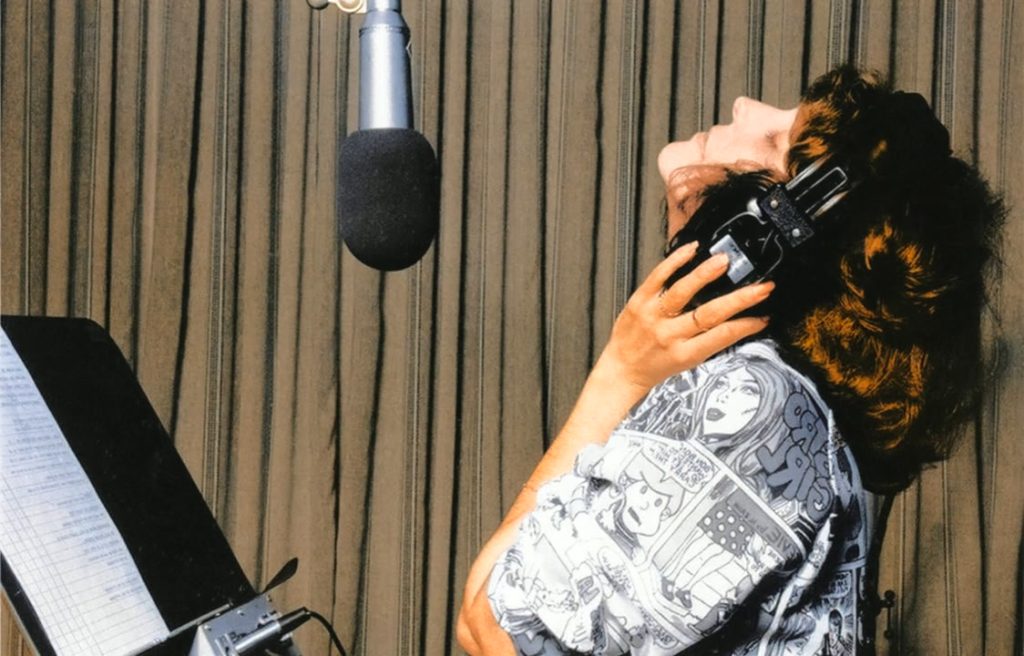
I grew up on Led Zeppelin, Black Sabbath, and Creedence Clearwater Revival. Admitting you liked the Carpenters in those days was about as popular as admitting you played with Barbie dolls. The difference was that I actually did like the Carpenters.
Years later, after suffering a stroke in 2014, I found myself searching for Karen Carpenter.
Not because I was a lifelong superfan.
Not because I was writing a story.
For some reason, during one of the most difficult periods of my life, her voice became a source of comfort and strength. That eventually sent me on a journey to Downey, California, searching for the places where Karen Carpenter lived, learned, and became one of the most recognizable voices of the twentieth century.
The search really began when I watched a recent episode of Professor of Rock, one of the most popular classic rock channels on YouTube. The host was discussing major artists who are still not in the Rock and Roll Hall of Fame.
One of the names he highlighted was The Carpenters.
What caught my attention was his observation that many hard rock fans secretly admire Karen Carpenter. Hearing someone else say that surprised me because I had quietly felt the same way for years.
When “Close to You” reached number one during the summer of 1970 and remained there for four weeks, I was twelve years old. At the time my favorite band was Creedence Clearwater Revival, but I loved that song.
What I remember most, however, was how much every girl I knew loved it.
The Carpenters were suddenly everywhere. They appeared on television specials with Andy Williams, Ed Sullivan, and Bob Hope. America wasn’t just hearing their music—it was getting to know Richard and Karen themselves.
Rock critics weren’t nearly as enthusiastic.
Many of them viewed the Carpenters as the opposite of what rock music represented. They dismissed the duo as overly polished, commercial, and safe. To some critics, the Carpenters represented corporate pop at its most successful.
The public disagreed.
Hit after hit followed.
“We’ve Only Just Begun.”
“Rainy Days and Mondays.”
“Superstar.”
“Top of the World.”
More than fifty years later, those songs still resonate with audiences around the world.
My personal favorite has always been “Superstar.”
Written by Leon Russell and Bonnie Bramlett, the song became something entirely different when Karen Carpenter recorded it. Richard Carpenter reportedly discovered the song after seeing Bette Midler perform it on The Tonight Show in 1971. He immediately recognized its potential and arranged it for Karen.
The result remains one of the most haunting vocal performances ever recorded.
Leon Russell himself later praised Karen’s interpretation, and I always loved him for saying that. To me, “Superstar” is one of the finest songs ever written.
Years later, while attending college in Lake Tahoe, an old girlfriend from Los Angeles came to visit. One evening we were sitting high above the lake listening to music when “Rainy Days and Mondays” came on the radio.
I had heard the song countless times before.
But this time something happened.
Karen’s voice seemed to float over the water and mountains. The song hit me in a completely different way than it ever had before. Suddenly I understood why so many people connected with her music. It wasn’t simply her technical ability. It was the honesty in her voice. Every lyric sounded believable.
It was one of those rare moments when a song you’ve known for years suddenly reveals itself all over again.
After my stroke, those songs became even more meaningful.
At the time I was living only about fifteen miles from Downey, California. One day I decided I wanted to see the places connected to Karen Carpenter’s life.
So I went looking.
Most people don’t realize that before Karen Carpenter became one of the most celebrated vocalists in popular music, she was known as a drummer.
At Downey High School she joined the marching band, initially playing glockenspiel before discovering a natural talent for percussion. By her teenage years she was already developing into an exceptional drummer, long before the world discovered her singing voice.
I visited Downey High and met a coach who drove me around campus in a golf cart. He showed me various parts of the school and shared stories about its history.
What surprised me most was what I didn’t find.
There was no major plaque. No monument. No prominent tribute to Karen and Richard Carpenter.
For two people who brought so much joy to so many millions around the world, I expected something more.
The city itself, however, still preserves pieces of their story.
One of the most interesting stops was a pair of apartment buildings purchased by the Carpenters during the height of their success in the early 1970s. Richard and Karen renamed them after two of their biggest hits: Close to You and We’ve Only Just Begun.
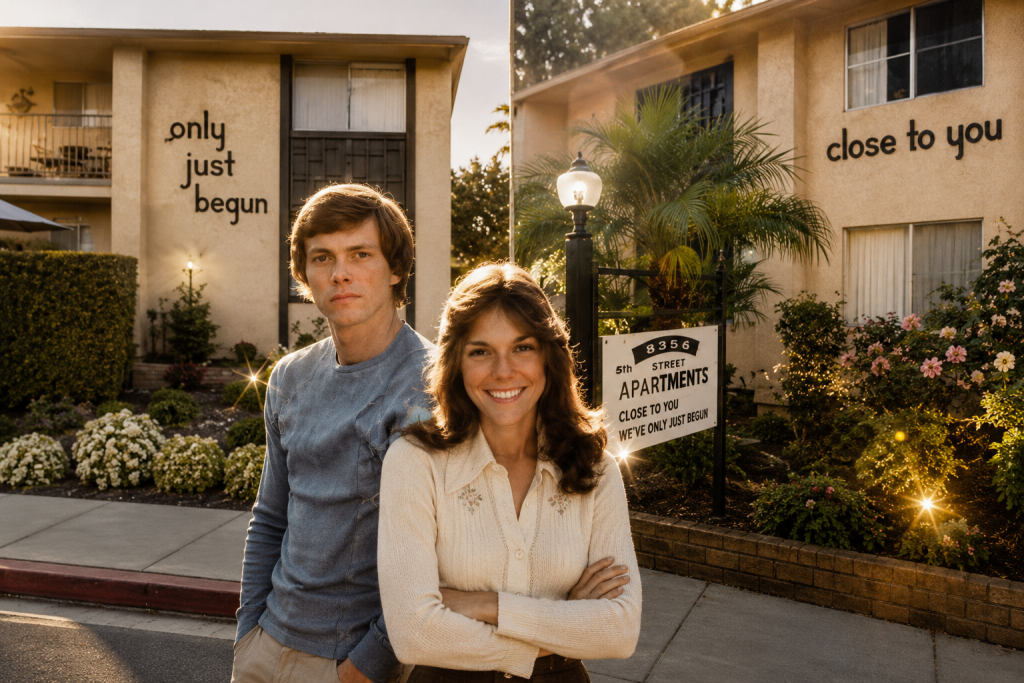
The buildings still stand today.
The names are still painted on them.
Although the Carpenter family no longer owns the properties, they remain one of Downey’s most unique landmarks and a reminder of how enormous the duo’s success had become.
I also visited the neighborhood where the Carpenter family home once stood.
Unfortunately, the famous Newville Avenue house had already been demolished by the time I arrived. I walked the street and took photographs, trying to imagine the place where Richard and Karen rehearsed, dreamed, and built their careers.
Standing there, I found myself thinking about something larger.
The records remain.
The songs remain.
But many of the physical places disappear.
The studios change.
The houses come down.
The landmarks fade.
Yet somehow the music survives.
One story I always found fascinating involved Karen and Elvis Presley.
According to singer Petula Clark, she and Karen attended one of Elvis’s Las Vegas performances in 1973 and later visited him backstage. Clark recalled that Elvis seemed quite taken with Karen and showed more than a little romantic interest.
Karen, as always, appeared modest and somewhat shy.
Clark later joked that she felt compelled to rescue her friend from The King’s attention before things went too far.
Whether every detail has survived perfectly through the years hardly matters. What the story demonstrates is how magnetic Karen Carpenter was, even to other legendary performers.
Today, whenever discussions arise about artists who deserve greater recognition, I always think of The Carpenters.
They may never fit everyone’s definition of rock and roll.
But they created music that has lasted for more than half a century.
They influenced countless musicians.
They sold millions of records.
And Karen Carpenter remains one of the most distinctive and emotionally powerful voices ever captured on tape.
Herb Alpert believed in them when he signed them to A&M Records.
I believe in them now.
And if influence, longevity, musicianship, and unforgettable songs count for anything, Richard and Karen Carpenter deserve their place in the Rock and Roll Hall of Fame.
Sometimes the search for Karen Carpenter turns out to be much more than a search for a singer.
Sometimes it’s a search for the moments, the places, and the music that helped shape our own lives.
And sometimes, decades later, a voice on the radio still has the power to carry us home.